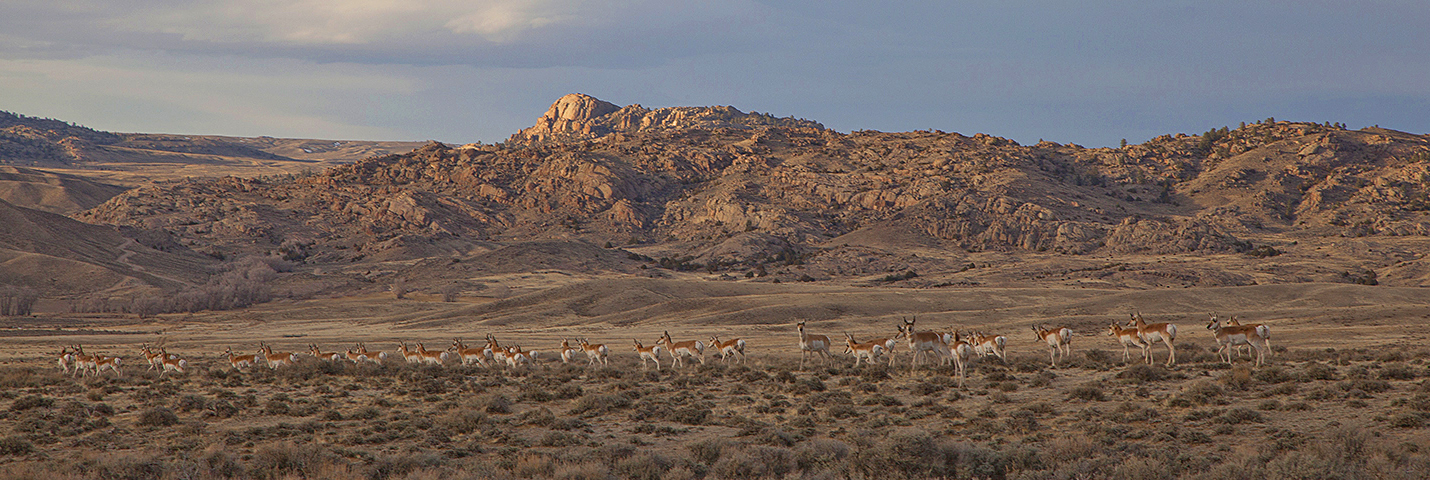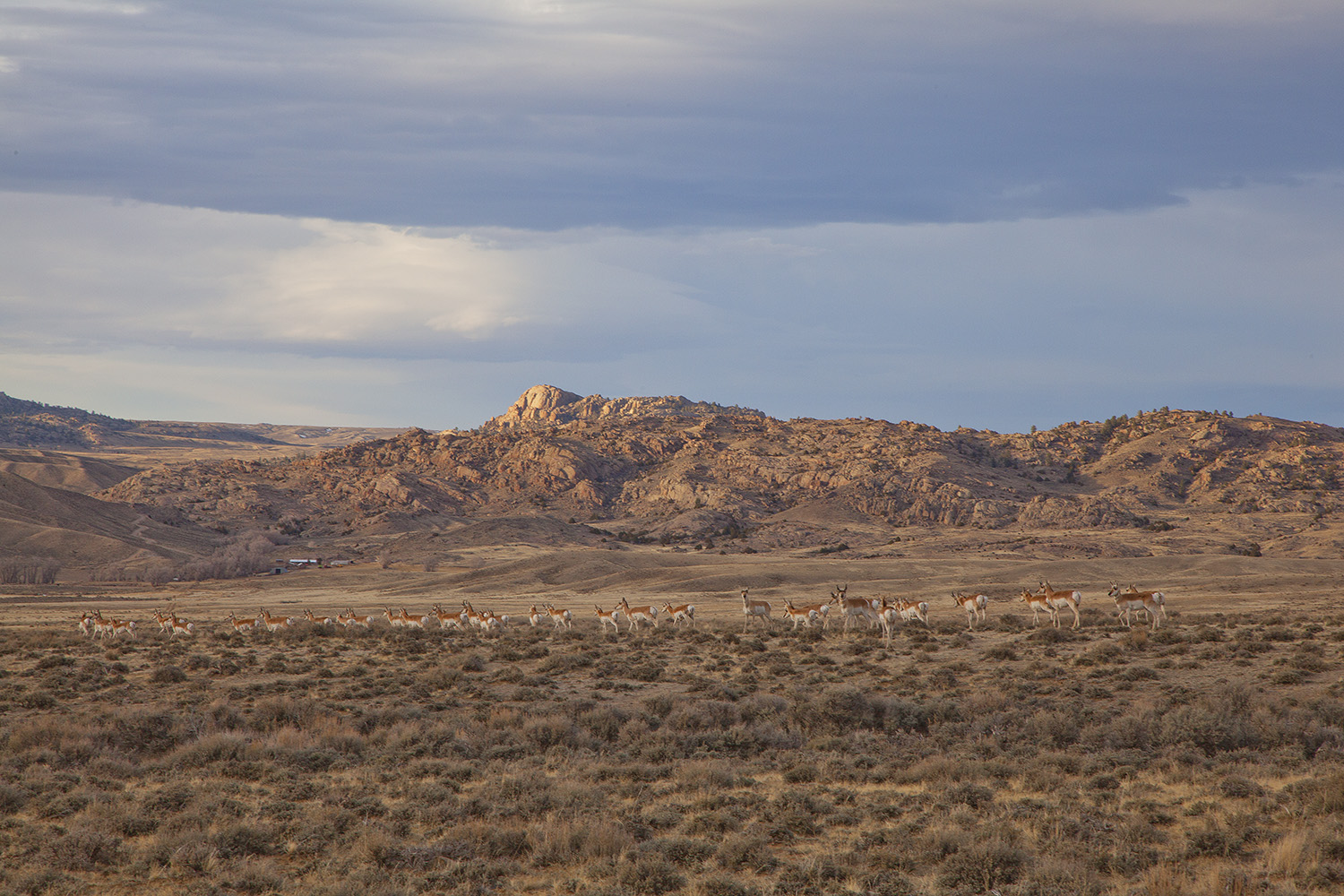
Pronghorns in the Sweetwater valley, copyright 2014 Chris Madson.
THE HORRIFIC WINTER OF 2022-23 IN WESTERN WYOMING HAS CREPT BACK INTO THE NEWS IN RECENT DAYS. THE people who went out into the sage south of Pinedale when the snow finally released its grip that year were appalled at the sight of scores of pronghorn carcasses scattered across the landscape. Estimates of the winterkill ranged as high as 70 percent. The Wyoming Game and Fish Department set the loss at roughly 50 percent, which meant that the weather had claimed something like 20,000 pronghorns in the Sublette herd.[i]
Some have said that it was the worst winter in living memory in that part of the world. I guess that depends to a marked degree on how long your memory is. The winter of 1983-84 was a ring-tailed screamer with temperatures in Pinedale as low as 37 below and average snow cover well over a foot.[ii] I won’t argue that it was worse than 2022-23 because I wasn’t in Pinedale in 2022, but I think it’s fair to say it was comparable in its intensity and effect on big game, especially the smallest of our big game animals, the pronghorn.
In its most recent analysis of the Sublette pronghorn herd’s condition, Game and Fish commented: “Now three years after that winter [2022-23], better than average fawn ratios have let this herd start to recover and regain some of the ground that it lost during that winter.” The “ratio” referred to here is the ratio of fawns per 100 doe pronghorns in the herd. In the 2025 report, that ratio was 70 youngsters per 100 does, which is, as the biologists report, a ratio that may well result in more pronghorns in the Sublette herd, assuming there isn’t another killer winter in our immediate future.
But the description of this ratio as “better than average” bothered me a little. I spent thirty years looking over the shoulders of the biologists who literally risk their lives collecting data on Wyoming’s big game herds, and the idea that 70 fawns per 100 doe pronghorns was “better than average” strikes me as more than a little myopic. This would be nothing more than a quibble among professionals— except that the fawn:doe ratio reflects a lot of ecological, physiological, meteorological, and geographic variables that are particularly critical to the well-being of pronghorns. When the ratio is low, it whispers of management problems that have little or nothing to do with the length of a hunting season or the number of permits issued.
The winter of 2022-2023 was a classic example of the effect weather can have on a pronghorn herd. It was exceptionally long, exceptionally cold, and exceptionally snowy. Pronghorns lose weight during the winter, even a mild winter. How many survive depends largely on the amount of fat they have when the first storm hits, how much forage they can find to augment their fat stores, and the amount of energy they lose to the cold as they look for that forage. The colder it gets and the longer the cold lasts, the more energy they need. The more energy they burn finding forage, the less they have to keep warm. In 2022-2023, nearly half the adult pronghorns in the Sublette herd lost more energy than the combination of forage and fat could furnish— those animals died.
There is a lingering side effect to the winter energy audit. Pronghorns mate in September and early October, which means that does are carrying the next generation through the winter. In the most extreme winters, some does will resorb their growing embryos in a desperate attempt to survive. The does that deliver their young the next spring may not be able to produce enough milk to support the newborns, and the newborns themselves may be unusually small and weak. The fawn:doe ratio drops after a bad winter, reflecting the loss of reproductive potential.
Historically, there has often been a tiny silver lining in the black cloud of a killer winter. Deep snow and extended cold often result in a wet spring, which brings a smorgasbord of forage for the pronghorns that have survived. In addition, there is less competition for that forage since a large part of the herd has been erased. The bountiful supply of groceries allows adult does to fatten up for the fall rut, and the stored fat helps them get through the winter with their fawns safe in the womb and well-nourished with milk after birth the following spring.
In such years, nearly every doe will bear twins. Biologists who have watched pronghorn populations recover after a bad winter call it “the bounce,” an increase in population almost as startling as the reproductive potential in a population of rabbits.
The winter of 1983-1984 was one of the epic killers of the last century. The population estimate for the Sublette pronghorn herd dropped by more than 13,000 animals after that winter. The fawn:doe ratio in the fall of 1983 was 72:100. In the fall of 1984, it dropped to 52:100 because the does in the herd were in such poor condition coming out of the winter. A year later, the ratio rose to 72:100. In 1986, it climbed again to 84:100. In 1987, it hit 90:100. The bounce.
The veteran biologists who have followed the ups and down of Wyoming’s pronghorn population for decades and documented these meteoric recoveries are expressing concern these days. “The bounce,” they say, is gone.
Since we’re focused here on the Sublette herd, let’s consider some of the recent fawn:doe ratios. After the winter of 2022-23, the ratio subsided to 47 fawns per 100 does, an expected consequence of the poor condition of the herd’s females. In the fall of 2024, it rose to 68:100, a moderate recovery. In 2025, it hit 70:100. Is this really “better than average?
In the ten-year span between 1973 and 1982, the Sublette herd averaged almost 82 fawns per 100 does, with a peak as high as 96:100. In the 1970s, other pronghorn herds in Wyoming produced well over 100 fawns per 100 does. One of the more troubling statistics from the record of the Sublette herd is the ratio from 2022, the year before the killer winter— that year, there were only 55 fawns per 100 does in the Sublette herd.
In fairness, local biologists say that four out of the last six winters in Pinedale country have been “bad” for pronghorns. That may well be, and those winters may offer at least a partial explanation for the lack of a “bounce” in the Sublette herd. But I’m troubled when I compare fawn:doe ratios from the good old days of pronghorn abundance in the 1970s and 1980s with the numbers today. Take just one other example, the Medicine Bow pronghorn herd a hundred miles east of the Sublette herd. In the decade between 1975 and 1984— even after the devastating effect of the winter of 1983-84— the Medicine Bow herd averaged 80 fawns per 100 does. Between 2016 and 2025, that average dropped to 67 fawns per 100 does.[iii]
Enough numbers. Today’s game managers can’t be blamed for assuming that the mean of the last ten years of data reflects some sort of normal state against which the current year’s estimates can be measured. They’re dealing with a new normal. What, precisely, is “new” about it? Weather, for one thing. We’ve seen four killer winters in the Green River country over the last six years. That’s something new. And, between those winters, we’re seen a remarkable succession of dry summers— without adequate forage,[iv] a pronghorn herd simply won’t “bounce.”
I’m tempted to deliver a sermon on climate change here, but, even if we took Bill McKibben’s advice and treated the climate challenge with the single-minded focus we used to win World War II, we wouldn’t see any improvement in the plight of the pronghorn for decades.
We can only change what we can change. The “Path of the Pronghorn” has finally been pried open— the migration corridor for a single herd of Wyoming’s pronghorns. There are other corridors in other parts of the state, just as critical to the well-being of migrating big game but poorly defined and beset with obstacles, both physical and political. Clearing the way for the migrants is important but only if the destinations on either end provide the animals with what they need. Of all the implications of the low fawn-to-doe ratios, this one may worry me the most.
How much forage do we leave for our pronghorns, on the summer pasture, along the migration corridors, down on the critical winter ranges? The fawn counts suggest it isn’t much, probably not enough to sustain the herds at the numbers some of us knew fifty and sixty years ago. If we want those thriving herds again, we need to feed them. According to the BLM’s own data, a vast area of the public range is in fair to poor condition.[v] No small part of this is due to a long history of abuse. If we care about pronghorns and much of the rest of our wild heritage, we need to stop that abuse and set about healing the damage.
And, while we’re considering how much livestock the range can really support, we need to turn our attention to the management objectives that have been set for many of our big game herds as well. Just one example: The current objective for the Sublette pronghorn herd is 48,000 animals.[vi] It will take a hell of a “bounce” to return that herd to the size it attained in the 1970s. It’s worth asking whether that objective is even achievable and sustainable in current conditions. As much as many of us would like to believe it’s possible, ongoing weather patterns and grazing regimes may not allow it. If that’s true, then our efforts to reach the current objective may only damage the habitat that remains. Hard data on the condition of the animals and their habitat could define the dimensions of this issue, but only if we care enough to collect it, and it won’t make a whit of difference if we don’t act on what we find.
Hunting is not the problem here. The length and timing of hunting seasons, the size of the buck harvest, the number of licenses we issue have little, if anything, to do with the sluggish production of pronghorn fawns in the last twenty or thirty years. Unfortunately, the only management tools state biologists really have to influence pronghorn populations are hunting seasons and license allocation.
The real solutions are controlled by other state and federal entities whose political agendas are set by a host of special interests with little or no interest in pronghorns or any other wildlife. They can be swayed only by massive public outcry. The success of the campaign to open the Path of the Pronghorn shows what is needed, but one migration corridor is just the barest beginning. If we really want to get back to “better than average,” we’ll have to feed our pronghorns better, and that’s not likely to happen until the public at large demands it.
—————-
[i] Anon, 2026. Green River Region Big Game Job Completion Report. Wyoming Game and Fish Department, Cheyenne, WY.
https://wgfd.wyo.gov/media/34073/download?inline. Accessed August 19, 2026.
[ii] NOAA, nd. NOAA Online weather data for Pinedale, Wyoming, for the months of November, December, January, February, March and April, 1978-79.
https://www.weather.gov/wrh/climate. Accessed August 19, 2026.
[iii] Anon, 2026. Laramie Region Big Game Completion Report. Wyoming Game and Fish Department, Cheyenne, WY.
https://wgfd.wyo.gov/hunting-trapping/job-completion-reports. Accessed August 19, 2026.
[iv] Shi, Hua, et al., 2022. Trends analysis of rangeland condition monitoring assessment and projection (RCMAP) fractional component time series (1985-2020). GI Science and Remote Sensing 59(1): 1243-1265.
https://www.tandfonline.com/doi/epdf/10.1080/15481603.2022.2104786?needAccess=true. Accessed September 21, 2026.
[v] Public Employees for Environmental Responsibility, 2024. Evaluating trends in rangeland health on Bureau of Land Management Lands. https://peer.org/wp-content/uploads/2024/05/Evaluating-Trends-Rangeland-Health-BLM-Lands-5_5_24-FINAL.pdf. Accessed September 21, 2026.
[vi] Anon, 2026. Green River JCR. Op cit.
 ON THE MORNING OF MAY 29, 1843, JOHN FREMONT RODE OUT OF THE LITTLE VILLAGE
 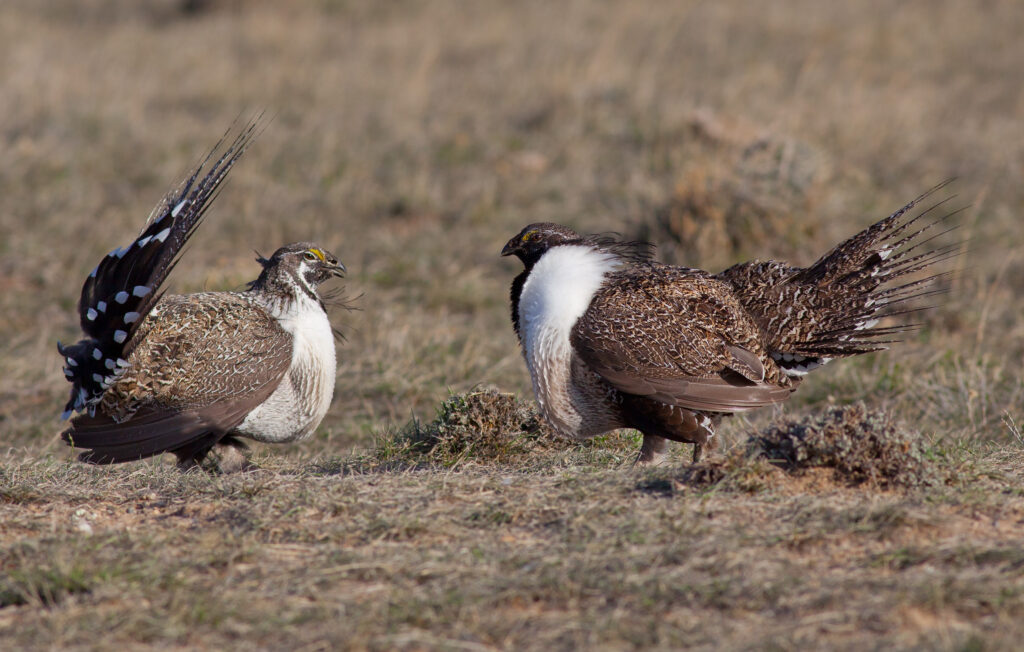 If there is one common denominator in four generations of sage grouse research, it is that sage grouse need sage. The birds depend on sagebrush and the native grasses and other plants underneath for cover and much of their food— they are, in the parlance of the ecologist, sagebrush obligates. Eliminate sagebrush, and you eliminate sage grouse. By 1900, much of the sagebrush that remained on the landscape was hardly fit to support livestock, let alone the wildlife that depended on it. In 1904, Wyoming’s wildlife officials estimated that there were only 5,000 pronghorn on the state’s primary antelope range.
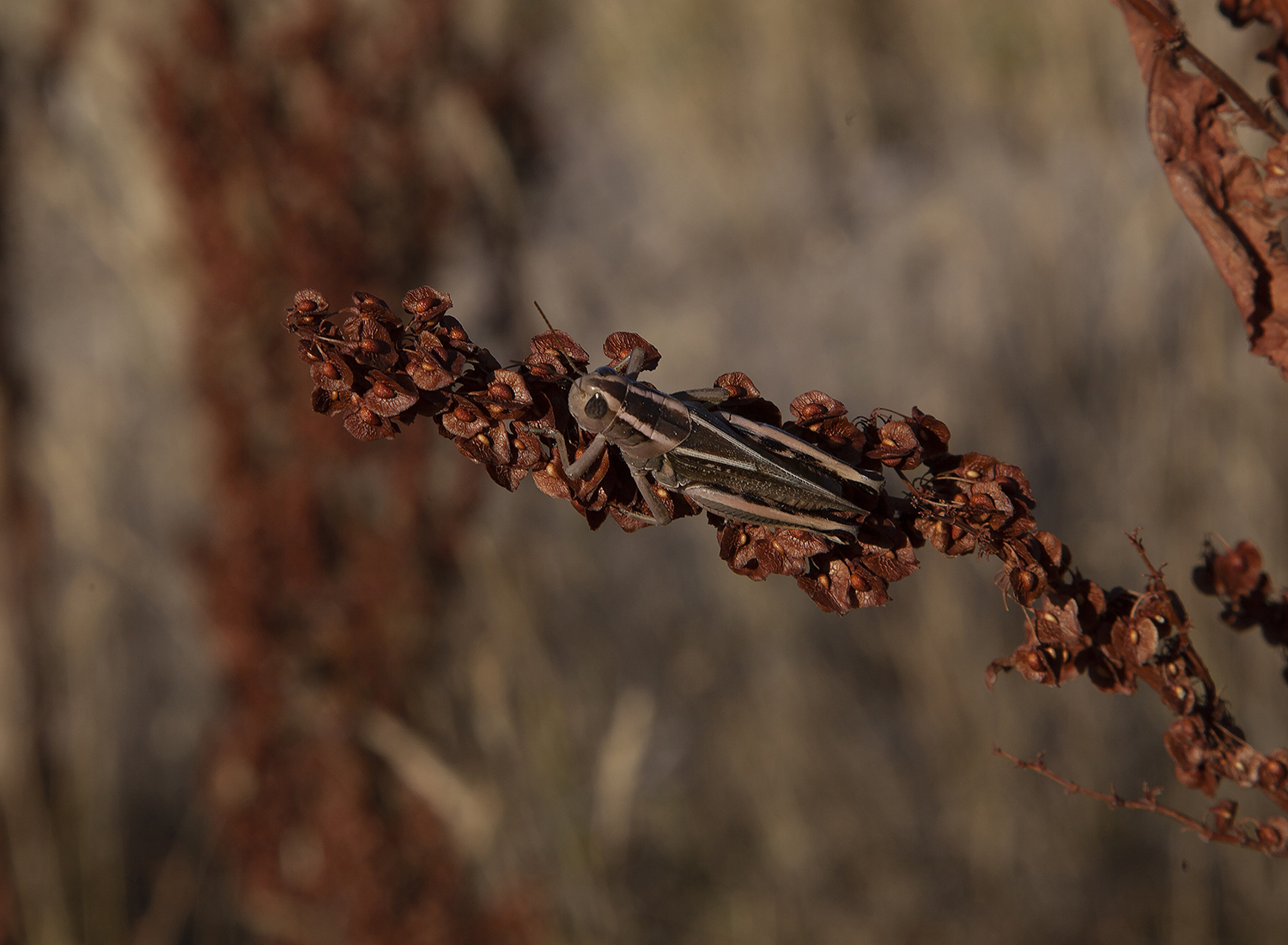 Grasshopper on curly dock, Chris Madson